
Forex Exchange Trading for Beginners: 7 Essential Steps to Start
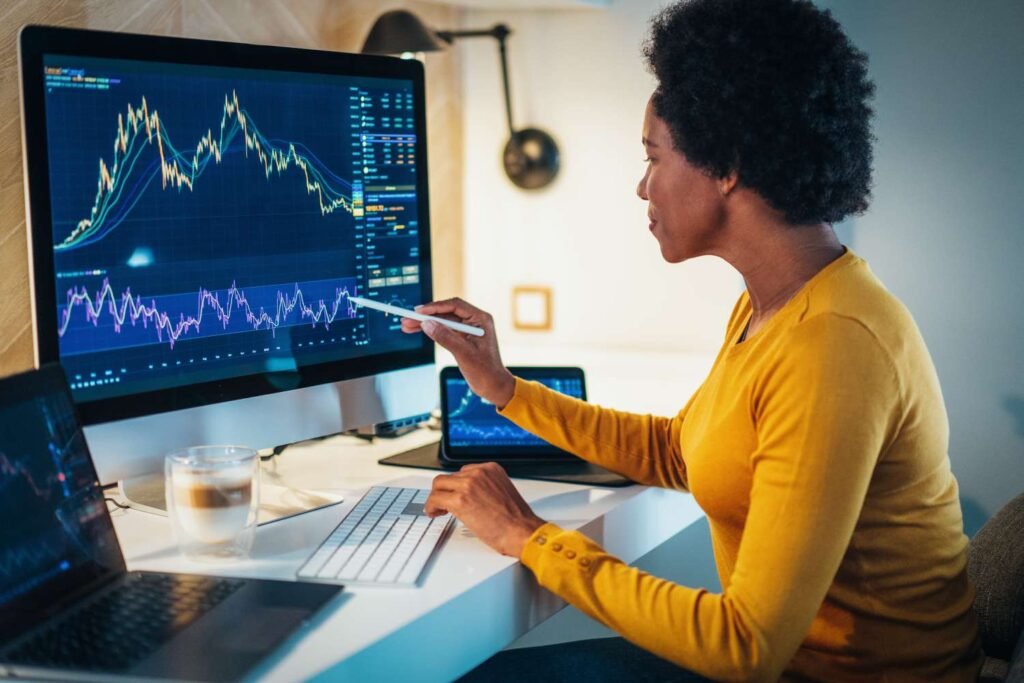
The Forex market processes trillions of dollars in trading volume every day, attracting people who want to profit from currency price movements. However, jumping into the market without the right knowledge can lead to costly mistakes. If you’re interested in Forex Exchange Trading for Beginners, this guide walks you through the 7 essential steps every beginner should follow. What Is Forex Exchange Trading? Forex, short for foreign exchange, is the global market where currencies are bought and sold. When you exchange naira for US dollars, euros for pounds or another currency for a different currency, you are participating in foreign exchange. Forex traders take this concept further by attempting to profit from changes in exchange rates. Currencies are quoted in pairs because one currency is always valued against another. For example, EUR/USD shows the value of the euro relative to the US dollar. If EUR/USD rises, the euro has strengthened relative to the dollar; if it falls, the euro has weakened relative to the dollar. The forex market operates through a decentralised over-the-counter network rather than through one central exchange. During the trading week, the market operates across major financial centres around the world. How Does Forex Trading Work? Forex trading involves taking a position on whether one currency will strengthen or weaken against another. Suppose EUR/USD is trading at 1.1000. If you believe the euro will strengthen against the US dollar, you could buy EUR/USD. If the pair rises to 1.1100, the trade has moved in your favour. If you believe the euro will weaken against the dollar, you could sell EUR/USD. If the pair falls, the trade has moved in your favour. This means forex traders can potentially benefit from both rising and falling markets, depending on the position they take. However, leverage makes forex trading particularly important to approach with proper risk management. A relatively small amount of margin can control a larger position, which can magnify both gains and losses. 7 Essential Steps for Forex Exchange Trading for Beginners 1. Learn How Currency Pairs Work Understanding currency pairs is the first major step. A pair contains two currencies: For example, in GBP/USD: Forex pairs are commonly grouped into three categories: Pair Type Examples Major pairs EUR/USD, GBP/USD, USD/JPY Minor pairs EUR/GBP, GBP/JPY, EUR/AUD Exotic pairs USD/NGN, USD/ZAR, EUR/TRY Beginners often start by studying major pairs because they are among the most actively traded currency pairs and generally have substantial liquidity. 2. Understand Pips, Lots and Position Size Before placing a trade, you need to understand how forex price movements and trade sizes are measured. A pip is a standardised unit used to describe a change in a currency pair’s exchange rate. For many major currency pairs, one pip is typically the fourth decimal place. For example: EUR/USD: 1.1000 → 1.1010 This represents a 10-pip movement. You also need to understand lot size. A standard lot represents 100,000 units of the base currency, while smaller position sizes include mini lots and micro lots. Your position size affects how much each pip is worth. This is why beginners should calculate their potential loss before entering a position rather than choosing a lot size based on how much money they hope to make. 3. Learn the Spread and Trading Costs The spread is the difference between the buying price and selling price of a currency pair. For example, if a broker quotes: The difference is the spread. The spread is one of the costs associated with entering a forex trade. Depending on the broker and account type, traders may also encounter commissions, overnight financing or swap charges and other fees. Saxo notes that holding positions overnight can involve rollover or financing adjustments, while trading costs can vary according to the product and account. Understanding these costs matters because a strategy that looks profitable before trading expenses may produce a different result after spreads and other charges are included. 4. Understand Leverage and Margin Leverage allows traders to control a larger position with a smaller amount of capital. For example, with 10:1 leverage, $1,000 of margin could provide exposure equivalent to $10,000, subject to the broker’s terms and applicable regulations. This can make forex accessible with relatively small accounts, but it also increases risk. If the market moves against a leveraged position, losses can accumulate quickly. Saxo specifically highlights leverage as a factor that can amplify losses, while IG explains that margin is the amount required to open and maintain a leveraged position. For beginners, leverage should therefore be treated as a risk-management issue rather than simply a way to trade larger positions. 5. Learn What Moves Currency Prices Forex prices do not move randomly. Numerous factors can influence the relative value of currencies. Important market drivers include: Interest rates Central-bank interest-rate decisions can significantly affect currencies because they influence the attractiveness of holding assets denominated in that currency. Economic data Reports such as inflation, employment, GDP and economic-growth data can influence expectations about a country’s economy and monetary policy. Central-bank policy Statements and decisions from central banks can create substantial movements when markets reassess future interest rates. Geopolitical events Political developments, conflicts and international economic events can influence investor behaviour and currency demand. Market sentiment Traders’ expectations about risk and economic conditions can also influence currency movements. Saxo identifies interest rates, economic data, government policy, investment flows and geopolitics among the factors that can shape currency prices. 6. Build a Simple Forex Trading Strategy Beginners do not need a complicated strategy containing dozens of indicators. Start with a clearly defined approach. For example, a basic strategy could specify: Common approaches include: Trend trading: Trading in the direction of an established market trend. Range trading: Looking for opportunities when price repeatedly moves between support and resistance. Breakout trading: Trading when price moves beyond an established range or important level. Swing trading: Holding positions for several days or potentially longer to capture a larger price movement. The strategy itself is only one part of the process. Consistent execution and risk
How Often Do Forex Traders Trade? A Complete Guide
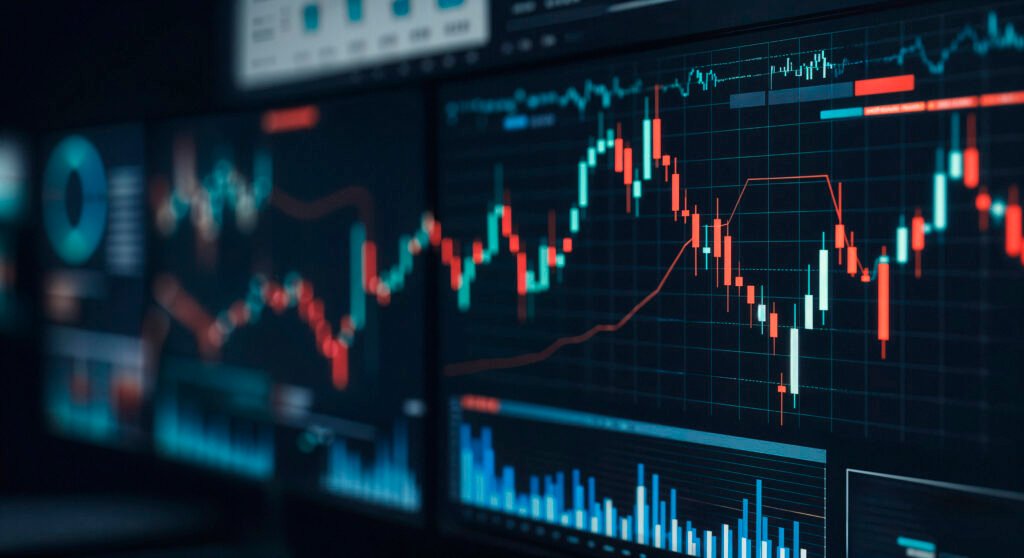
The forex market moves around the clock, creating countless opportunities for traders across different time zones. But that does not mean every trader is constantly opening and closing positions. Some traders watch the market for hours and execute multiple trades, while others may wait days for one setup that matches their strategy. So, how often do forex traders trade in real-world conditions? The answer depends on several factors, including trading style, strategy, timeframe, experience, and market conditions. In this guide, we’ll explore how often do Forex traders trade, how professionals approach trade frequency, the risks of overtrading, and how to find a suitable trading routine. How Often Do Forex Traders Trade? There is no fixed number of trades that every forex trader should make. Trading frequency varies considerably depending on the trader’s strategy, timeframe, experience, risk tolerance, and the type of market conditions they are dealing with. A scalper may enter and exit several positions within an hour, while a swing trader might wait several days before finding an opportunity. A position trader could hold a trade for weeks or months and make only a handful of trades during that period. A general comparison looks like this: Trading Style Typical Trading Frequency Typical Holding Period High-frequency trading Hundreds or thousands of trades Seconds or milliseconds Scalping Several to dozens of trades per day Seconds to minutes Day trading A few to several trades per day Minutes to hours Swing trading A few trades per week Several days to weeks Position trading A few trades per month Weeks to months Long-term trading A few trades per year Months to years These figures are not rules. A trader can take more or fewer trades depending on their strategy and the opportunities available in the market. The important point is that trading frequency should normally come from a trading strategy rather than a desire to stay active. Why Do Forex Traders Trade at Different Frequencies? Forex traders do not all approach the market in the same way. Their trading frequency is usually a result of how they analyze price movements and what they are trying to achieve. Several factors influence how often someone trades. Trading Strategy A trader’s strategy is one of the biggest factors affecting trading frequency. Scalping strategies look for small price movements and can produce numerous trading opportunities in a single session. Swing trading strategies, on the other hand, are designed to capture larger price movements and may generate only a few opportunities each week. If a strategy only produces five valid setups in a month, taking 30 trades simply to become more active would mean entering positions that do not meet the strategy’s criteria. Trading Timeframe The timeframe a trader uses also affects the number of potential setups. A trader analyzing a 1-minute chart can encounter several price movements within a short period. Someone using a daily chart will see fewer signals because each candle represents an entire trading day. This is why traders using lower timeframes generally have more opportunities to enter trades than traders using higher timeframes. Market Conditions Market conditions can significantly change trading frequency. When the market is volatile and moving strongly, traders may find several setups that meet their criteria. During periods of consolidation, however, price may move sideways and provide fewer opportunities. Experienced traders generally understand that there will be periods when the best decision is to wait. Risk Management The amount of risk a trader is willing to take can also influence trading frequency. Someone risking a larger percentage of their account on every position may need to be more selective about entering trades. A trader using smaller risk per position may have more flexibility, but that does not mean taking unnecessary positions is beneficial. Risk management should remain consistent regardless of how frequently a trader enters the market. Experience Beginners often feel pressure to trade because they believe being active will help them improve or generate more profits. Experienced traders tend to understand that there is no requirement to trade simply because the forex market is open. They can wait for a setup that fits their strategy instead of reacting to every price movement. How Often Do Professional Forex Traders Trade? Professional forex traders can trade at very different frequencies depending on their roles and strategies. There is no standard number of trades that defines a professional trader. A professional scalper, institutional trader, algorithmic trader, and long-term currency trader may have completely different trading schedules. Some professionals may execute multiple trades in a single session. Others may wait several days before entering a position. The important distinction is that professional trading is generally structured around a defined process. Traders may have specific rules covering: This means professional traders are not necessarily looking for reasons to trade more often. Instead, they are usually looking for situations that meet their predefined conditions. Do Professional Forex Traders Trade Every Day? No. A professional forex trader does not necessarily need to trade every day. A trader may monitor the market every day without opening a position. Watching price action and finding a valid setup are two different things. For example, a swing trader might analyze several currency pairs on Monday and identify no suitable opportunity. By Wednesday, a major support or resistance level may produce a setup that meets their strategy. The trader’s lack of activity on Monday does not necessarily mean they missed an opportunity. It may simply mean the market did not meet their conditions. This distinction is important because new traders can confuse market activity with trading opportunity. The forex market is always moving, but not every movement needs to be traded. How Often Do Scalpers Trade? Scalpers generally have one of the highest trading frequencies among manual forex traders. Their objective is to capture relatively small price movements over short periods. A scalper may hold a position for seconds or minutes before closing it. Depending on their strategy and market conditions, a scalper could take several trades during a session
Foreign Exchange Risk: 4 Proven Ways to Reduce Currency Risk
Foreign exchange risk can affect businesses, investors, and individuals whenever money, assets, or payments are exposed to more than one currency. A change in an exchange rate can increase costs, reduce revenue, or lower the value of an overseas investment when converted back into the home currency. The good news is that foreign exchange risk can be managed. Businesses can reduce their exposure by matching currencies, using forward contracts, applying options and swaps, and creating a structured hedging policy. This guide explains 4 proven ways to reduce currency risk, how each strategy works, and when it may be appropriate. What Is Foreign Exchange Risk? Foreign exchange risk is the possibility of losing money because the exchange rate between two currencies changes. For example, imagine a Nigerian company agrees to pay a supplier $100,000 in three months. If the naira weakens significantly against the US dollar before payment, the company will need more naira to purchase the same $100,000. The underlying transaction has not changed. The currency conversion has. Foreign exchange exposure can affect international payments, imports, exports, foreign investments, loans, overseas subsidiaries, and businesses that earn revenue in currencies different from their operating currency. HSBC identifies transaction, translation, and economic risk as major forms of FX exposure. The 3 Main Types of Foreign Exchange Risk Before choosing a strategy, it helps to identify the type of exposure involved. 1. Transaction risk Transaction risk occurs when exchange rates change between agreeing to a foreign-currency transaction and settling it. For example, an importer that must pay a foreign supplier in euros could face a higher domestic-currency cost if the euro appreciates before payment. 2. Translation risk Translation risk affects companies with foreign subsidiaries or assets when their financial statements are converted into the parent company’s reporting currency. The underlying foreign asset or revenue may not have changed in local-currency terms, but its reported value can change after conversion. 3. Economic risk Economic risk is the longer-term effect of exchange-rate movements on a company’s revenue, costs, competitiveness, and future earnings. For example, a sustained appreciation of a company’s home currency could make its exports more expensive for international customers. Because these exposures behave differently, companies generally need to match their risk-management approach to the underlying exposure rather than applying one blanket hedge to everything. CFI similarly describes transaction, translation, and economic exposure as the three major dimensions of corporate FX risk. 4 Proven Ways to Reduce Foreign Exchange Risk There is no single strategy that eliminates currency risk in every situation. The appropriate approach depends on the currency involved, size and timing of the exposure, business objectives, hedge cost, and tolerance for exchange-rate volatility. Here are four widely used strategies. 1. Use Currency Forward Contracts A currency forward is an agreement that fixes an exchange rate for a specified amount of currency at a future date. This can be particularly useful when a business already knows that it will receive or pay a foreign currency in the future. How does a currency forward work? Suppose a company knows it must pay €500,000 to a European supplier in 90 days. The company is concerned that the euro could become more expensive against its home currency before the payment date. Instead of waiting and accepting whatever the market rate is in 90 days, the company could enter into a forward contract with a financial institution to purchase the €500,000 at an agreed exchange rate on the specified date. This provides greater certainty about the domestic-currency cost. Currency forwards are commonly used by importers and exporters because they can be customized around the amount and settlement date of an expected transaction. Advantages of forward contracts Limitations The main trade-off is that fixing the exchange rate also means giving up the potential benefit of a favorable currency movement. For example, if a company locks in a rate and the foreign currency subsequently becomes cheaper, the company may still be committed to the agreed forward rate. There can also be costs or financial consequences if the underlying transaction is cancelled or the hedge needs to be terminated early. HSBC notes that early termination of some FX risk-management products can result in significant costs depending on market conditions and other factors. 2. Use Currency Options for Flexible Protection Currency options provide another way to manage foreign exchange risk while retaining some ability to benefit from favorable exchange-rate movements. Unlike a forward, an option generally gives the buyer the right, but not the obligation, to buy or sell a currency at a predetermined exchange rate. This flexibility comes at a cost: the buyer typically pays an upfront premium. Imagine an exporter expects to receive $500,000 in 60 days. The company is worried that the dollar could weaken against its home currency before it receives the money. It could purchase an option that provides protection at a predetermined exchange rate. If the exchange rate moves unfavorably, the company can use the option according to its terms. If the market moves favorably instead, the company can potentially allow the option to expire and exchange the currency at the more favorable market rate. The exact economics depend on the option structure, strike price, premium, maturity, and settlement terms. 3. Create a Natural Currency Hedge Not every currency risk requires a derivative. A natural hedge reduces FX exposure by matching foreign-currency revenues with foreign-currency expenses. The basic idea is simple: if a company receives and spends the same currency, movements in that currency may have less impact on its net cash position. Consider a company that earns €2 million from customers in Europe. Instead of converting the entire amount immediately into its home currency, the company could use part of its euro revenue to pay euro-denominated expenses such as: The company has effectively matched some of its euro inflows with euro outflows. If the euro moves against the company’s reporting currency, the impact on its net exposure may be reduced because both revenue and expenses are affected by the same currency movement. CFI
Trading Course for Beginners: 7 Essential Skills to Start Trading

If you are searching for a trading course for beginners, you need more than a collection of videos explaining when to buy or sell. You need to understand how markets work, how trades are executed, how risk is calculated and how to build a repeatable trading process. Trading courses for beginners commonly introduce financial markets, market terminology, technical analysis, fundamental analysis, risk management, order execution and trading psychology. But knowing what a course covers is only the beginning. You also need to understand which skills matter, how to practise them and what to look for when choosing a course. Here are seven essential trading skills to develop before putting significant capital at risk. What Should a Trading Course for Beginners Teach? A properly structured trading course for beginners should take you from basic market knowledge to practical application. At a minimum, you should learn: This progression matters because a beginner who understands indicators but does not know how to calculate risk is still missing a fundamental part of trading. 7 Essential Trading Skills for Beginners 1. Understand How Financial Markets Work Before learning a strategy, understand the market you intend to trade. Depending on your interests, this could include forex, stocks, indices, commodities, futures or other financial instruments. Start with basic concepts such as: You should also understand the difference between trading and investing. Trading generally involves taking positions based on expected price movements, while investing commonly involves holding assets over a longer period. Understanding these foundations makes it easier to follow more advanced trading lessons. 2. Learn to Read Trading Charts Charts allow traders to study historical and current price behaviour. Start with candlestick charts and learn what each candle represents: open, high, low and close. Then move into market structure. Important concepts include: For example, a sequence of higher highs and higher lows can describe an upward market structure. A sequence of lower highs and lower lows can describe a downward structure. This does not guarantee what price will do next. It simply provides a framework for analysing the market. A common beginner mistake is adding several indicators before learning how to read price itself. Build your chart-reading ability first. 3. Master Technical and Fundamental Analysis Technical and fundamental analysis give traders different ways of studying markets. Technical analysis focuses on price behaviour, charts and analytical tools. Beginners may encounter: You do not need dozens of indicators. The objective is to understand what a tool measures and how it fits into your trading method. Fundamental analysis considers economic and financial information that can influence markets. For forex, this can include: For stocks, company earnings, financial statements and business conditions can also become important. The goal is not to become an economist immediately. It is to understand which information can affect the market you trade and when important events are scheduled. 4. Learn Risk Management Before Chasing Profits Risk management should be one of the first skills you develop. A strategy can generate profitable trades and still produce poor results if you consistently risk too much. Learn how to manage: For example, with a $1,000 account, risking 1% on a trade means the planned risk is $10. Your position size should then be calculated according to the stop-loss distance and value of the instrument. The exact percentage you choose depends on your trading plan and circumstances. The important principle is to determine potential loss before entering the trade. Leverage deserves particular attention because it can increase market exposure and magnify losses. Beginner trading education should explain both its mechanics and its risks. IG’s beginner curriculum, for example, specifically covers orders, execution, leverage and risk protection. 5. Build a Trading Strategy After learning the fundamentals, you need a defined method for making trading decisions. A trading strategy should answer: Common approaches include: Do not try to master ten strategies simultaneously. Choose one logical approach, learn its rules and test it consistently. A strategy becomes useful when you can explain why you entered, where your risk was and what would have invalidated the setup. 6. Develop Trading Psychology and Discipline Technical knowledge does not automatically produce disciplined trading. A trader can correctly identify a setup and still make a poor decision because of fear, greed, impatience or the desire to recover a previous loss. Common psychological problems include: The solution is not simply to “control your emotions.” Create rules that reduce the opportunity for emotions to control your decisions. A written trading plan can specify when you trade, how much you risk, what setups qualify and when you must stay out. Trading psychology is therefore not an optional advanced subject. It is part of learning how to follow your process consistently. 7. Practise Trade Execution Understanding a chart is different from actually executing a trade. Beginners should practise: A demo account can provide a controlled environment for learning these mechanics. For example, IG’s beginner courses include practical exercises, quizzes and demo-account practice alongside lessons on financial markets and order execution. The objective of demo practice is not to prove that you can make easy profits. It is to become familiar with execution and test whether you can follow your trading plan. How to Choose a Trading Course for Beginners When comparing a trading course for beginners, look beyond the title and course length. Check the Curriculum Make sure it covers market fundamentals, analysis, risk management, execution and psychology. Look for Practical Learning Exercises, chart analysis, simulated trading, quizzes or trade reviews can help you apply theoretical concepts. Current beginner programmes from providers such as IG and Coursera use structured lessons and practical learning elements. Check the Level A beginner should not need advanced knowledge before starting the first lesson. Examine the Risk Education Be cautious of any course that focuses heavily on potential profits while giving little attention to losses, leverage and risk. Consider the Format You may prefer self-paced videos, instructor-led classes, live sessions or a combination. Avoid Unrealistic Claims A course should explain trading as a skill that
Powerful Forex Currency Trading Courses: 6 Online Options to Learn Forex Trading

Forex currency trading courses can help beginners understand the market without relying on scattered information. A course can introduce forex fundamentals, currency pairs, technical and fundamental analysis, risk management, trading psychology, and market analysis in a logical order. But with so many courses available, finding one that fits your goals, experience, and learning style can be challenging. This guide examines six forex education options, starting with BEO Forex Academy, and explains what each offers. You will learn what to look for in a forex course, how practical training supports learning, and why risk management should remain central to your education. What Is a Forex Currency Trading Course? A forex currency trading course is an educational programme designed to teach people how the foreign exchange market works and how traders analyze currency markets. Depending on the course, students may learn about: The goal should not simply be to learn when to buy or sell. A quality course should help students understand why a trade is being considered, how much risk is involved, and how to develop a consistent trading process. What Should You Learn From a Forex Trading Course? Before choosing a course, look at the subjects covered rather than focusing only on the course title. A well-rounded forex education should introduce: Forex Fundamentals You should understand how currency pairs work, what affects exchange rates, and how the forex market operates. Technical Analysis This includes reading charts, identifying trends, understanding support and resistance, and studying price movements. Fundamental Analysis You should learn how economic data, interest rates, central-bank decisions, inflation, employment data, and geopolitical events can affect currencies. Risk Management Risk management is one of the most important parts of trading education. A course should explain position sizing, stop-loss placement, risk-to-reward ratios, and how to manage trading capital. Trading Psychology Even a strong strategy requires discipline. Understanding emotions, patience, overtrading, and maintaining a trading plan can be important parts of a trader’s development. Overview of the Top Forex Currency Trading Courses 1. BEO Forex Academy BEO Forex Academy provides forex training designed to take students from foundational concepts toward more advanced trading knowledge. Its programmes include beginner-to-masterclass training, mentorship, and trading strategies. Visit BEO Forex Academy The Beginner/Masterclass programme combines theoretical lessons, practical exercises, and live trading sessions. Its curriculum covers areas such as forex terminology, market structure, trading platforms, risk management, psychology, technical analysis, fundamental analysis, and advanced strategies. This approach can be useful for learners who want more than isolated lessons and prefer a structured path through their forex education. BEO also offers mentorship, where students can receive more personalized guidance and work through areas such as technical and fundamental analysis. For someone looking for a forex currency trading course with a combination of structured learning and practical exposure, BEO Forex Academy provides several training options to consider. 2. FOREX.com Trading Academy FOREX.com provides an online Trading Academy with educational material organized around different experience levels, including beginner, intermediate, and advanced content. Its educational resources cover areas such as technical analysis, fundamental analysis, price action, trading strategy, risk management, and trading psychology. The platform can therefore be useful for traders who prefer online lessons and want to study specific areas of trading knowledge at different stages of their development. 3. Udemy Forex Courses Udemy offers a large collection of online forex courses created by different instructors. This means the content, teaching approach, course length, and depth can vary considerably between courses. Some courses focus on beginner concepts such as currency pairs, pips, leverage, and trading platforms, while others concentrate on technical analysis, strategies, or more advanced subjects. The major advantage of this type of marketplace is variety. However, students should carefully review the course curriculum, instructor information, reviews, and learning objectives before choosing a programme. 4. Coursera Forex Courses Coursera provides courses related to forex, currency trading, financial markets, technical analysis, risk management, and economic analysis. Its forex catalogue includes courses covering subjects such as currency trading strategies, chart reading, economic indicators, and trading platforms. This can suit learners who prefer structured online education and want to study trading alongside broader financial-market concepts. Because individual courses can differ significantly, it is important to check whether a particular programme focuses specifically on forex trading or approaches currencies from a wider finance perspective. 5. FX Academy FX Academy offers online forex education covering topics from basic concepts through more advanced trading techniques. Its lessons include educational tutorials, videos, quizzes, and other learning resources. The platform is designed for both beginners and more experienced traders who want to develop their understanding of forex. Its lesson-based approach can be suitable for learners who prefer studying individual topics at their own pace. 6. AvaAcademy AvaAcademy provides educational resources covering forex and other financial-market topics. Its material is designed to introduce traders to market concepts, analysis, trading strategies, and risk management. Like other online learning platforms, the experience is largely self-directed, making it suitable for people who prefer to study independently and move through educational material at their own pace. Forex Currency Trading Courses Compared Platform Learning Approach Main Focus Suitable For BEO Forex Academy Structured training, practical exercises, live sessions and mentorship Beginner to advanced forex education Beginners and developing traders FOREX.com Trading Academy Online lessons and educational resources Market knowledge, analysis, strategy and risk Beginners to advanced learners Udemy Instructor-created online courses Varies by course Learners seeking variety Coursera Structured online courses Forex and broader financial education Learners seeking academic-style courses FX Academy Online lessons, videos and quizzes Forex fundamentals and trading techniques Beginners and developing traders AvaAcademy Self-paced online education Forex, analysis and trading concepts Independent learners Why Practical Training Matters When Learning Forex Reading about forex is different from analyzing a live market. A course can explain what support and resistance are, for example, but students still need to learn how to identify those levels on an actual chart. Practical learning can help students: This is why courses that combine educational material with exercises, chart analysis, demonstrations, or live sessions
Forex Exchange for Beginners: 7 Things to Know Before You Trade
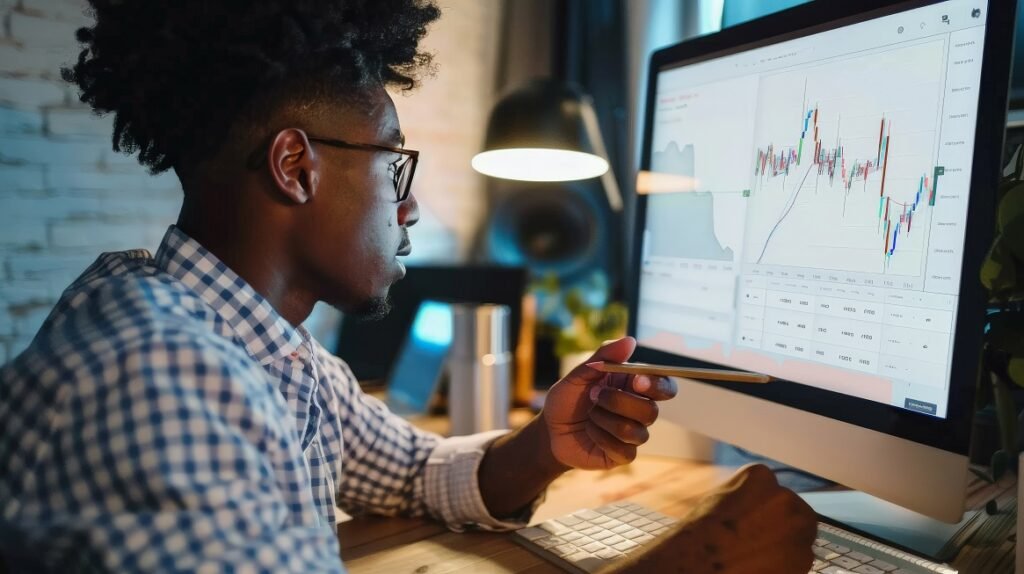
Forex exchange for beginners starts with one simple idea. You are always trading one currency against another. Miss that, and everything else gets confusing fast. The forex market is where currencies are bought and sold around the world. It is the largest financial market on the planet, and it is open five days a week, around the clock. Before you put real money in, you need to understand currency pairs, exchange rates, pips, spreads, leverage, and risk. This guide covers all seven concepts in plain language. What Is Forex Exchange? Forex exchange means swapping one currency for another. Say you are travelling from Nigeria to the United States. You change naira into dollars at the bureau de change. The rate on the day decides how many dollars you get. Forex trading uses the same idea, with a twist. Traders do not need the currency itself. They try to profit when the value of one currency moves against another. Banks, corporations, governments, funds and individual traders all take part. No single exchange controls it, which is why the market is called decentralized. Retail traders usually have one goal. They guess whether a currency pair will go up or down. How Does Forex Exchange Work Currencies are always quoted in pairs. One currency cannot have a price without another to measure it against. Common pairs include EUR/USD, GBP/USD, USD/JPY, AUD/USD and USD/CAD. In EUR/USD, the euro is the base currency. The US dollar is the quote currency. If the pair is quoted at 1.1000, one euro costs 1.1000 US dollars. Think the euro will get stronger against the dollar? You would buy EUR/USD. Think it will get weaker? You would sell it. Here is a quick example. You buy EUR/USD at 1.1000. The price climbs to 1.1050. That is a 50-pip move in your favour. If it drops to 1.0950 instead, you are 50 pips down. That is the core mechanic of forex trading. Everything else builds on it. 7 Essential Things to Know About Forex Exchange for Beginners 1. Understand Currency Pairs Currency pairs are the foundation of forex trading. They fall into three groups. Most beginners start with majors. They attract heavy trading volume and are covered by plenty of learning material. Liquidity and volatility still shift with market conditions, so nothing is fixed. 2. Learn How Exchange Rates Work An exchange rate tells you how much of one currency you need to buy another. If EUR/USD sits at 1.1000, one euro is worth 1.10 dollars. A rise to 1.1100 means the euro has gained on the dollar. A fall to 1.0900 means it has lost ground. Forex has no standalone price. A currency is only strong or weak compared with another one. Keep that in mind and charts start to make sense. 3. Know Pips, Lots and Position Size Forex prices move in tiny steps, so traders need a unit to measure them. A pip is that unit. For most pairs, it is a move in the fourth decimal place. Yen pairs use the second decimal place. A lot is a standard trade size. A standard lot is 100,000 units of the base currency. A mini lot is 10,000. A micro lot is 1,000. On EUR/USD, one pip on a standard lot is worth about $10. On a micro lot, it is worth about $0.10. Position size decides how hard each pip hits your account. Trade too big and a small move can hurt. Trade small while you learn. 4. Understand the Spread The spread is the gap between the buy price and the sell price of a pair. Suppose EUR/USD shows a buy price of 1.1002 and a sell price of 1.1000. The spread is 2 pips. You start every trade slightly in the red by that amount. Spreads are a real trading cost. They change with the pair, the broker and market conditions. News releases and thin trading hours can widen them. Many beginners stare at potential profit and ignore this cost. Do not be that trader. 5. Learn Leverage and Margin Leverage lets you control a bigger position than your deposit would normally allow. The deposit you put up to open that position is called margin. Here is an example. With 1:100 leverage, a $1,000 account can control a $100,000 position. Sounds great, until the market moves 1% against you. That move costs $1,000, which is your whole account. Leverage magnifies gains and losses equally. It is not free money. Before using it, learn your broker’s margin rules. Know what happens when your account runs low. 6. Understand What Moves Currency Prices Currency prices do not move at random. Many forces push them around: Central banks deserve special attention. A single rate decision can send a currency sharply up or down. Get into the habit of checking an economic calendar before you trade. Big announcements can turn a quiet chart into a rollercoaster in seconds. 7. Learn Risk Management Before You Trade Knowing how forex works is only half the job. You also need to know how to protect your money. Before every trade, answer these questions: Take a $1,000 account risking 1% per trade. Your planned loss is $10. With a stop-loss 20 pips away, you would trade 5 micro lots. If the stop is hit, you lose about $10 and move on. The right risk level depends on your strategy and situation. The rule stays the same. Decide your maximum loss before you enter, not after. How to Start Forex Trading as a Beginner Follow a clear path instead of jumping between random tutorials. Where Can Beginners Learn Forex Trading? You have plenty of options: books, webinars, educational websites, trading academies, structured courses and demo accounts. If you want a guided route from the basics to practical trading skills, explore the programmes at Beo Forex Academy. Whatever you pick, stick to one structured path. Social-media predictions and signal groups are a poor substitute for real skills. Final Thoughts Forex exchange for beginners comes
Forex Trading for Beginners: 7 Proven Ways to Start
Forex trading for beginners looks straightforward on a chart. Buy low, sell high, watch the pips add up. Then you open a live account and real money is on the line, and suddenly currency pairs, spreads, leverage, and margin all need to make sense before you place a single trade. This guide covers the mechanics first: how forex works, what moves prices, and the terms you can’t skip. Then it walks through seven steps to actually get started, how much capital you realistically need, the mistakes that trip up most beginners, and a first-trade example that ties the risk math together. What Is Forex Trading? Forex, short for foreign exchange, is the global market where currencies trade against one another. Unlike buying a company’s shares, you never trade one currency on its own. Forex is quoted in pairs like EUR/USD, GBP/USD, and USD/JPY. If EUR/USD sits at 1.1000, one euro is worth 1.1000 US dollars. Buy EUR/USD and you’re betting the euro strengthens against the dollar. Sell it, and you’re betting the opposite. The market itself is massive. The Bank for International Settlements reported average daily OTC foreign-exchange turnover of roughly $9.6 trillion in April 2025, putting forex among the largest financial markets in the world. That scale matters less to you as a beginner than understanding how your own trade works. Size of the market won’t save a poorly planned position. Key Forex Terms Every Beginner Should Know Before opening a trading account, get comfortable with the vocabulary. Here’s the shorthand version: Term Meaning Currency pair Two currencies quoted against each other Base currency First currency in the pair Quote currency Second currency in the pair Pip The standard unit for measuring most FX price movements Lot A unit describing position size Spread The difference between the bid and ask price Leverage The ability to control a larger position with less capital Margin The capital required to hold a leveraged position Stop-loss An order that limits how much a trade can lose Take-profit An order that closes a trade at a chosen profit level Pips and Lots A pip measures movement in a currency pair. For most major pairs, one pip sits at the fourth decimal place, so EUR/USD moving from 1.1000 to 1.1010 is a 10-pip move. JPY pairs typically use the second decimal place instead. The actual money value of a pip depends on the pair, your position size, and your account currency. A lot describes how big your position is: Contract sizes can vary by broker, so check the specifications on any instrument before you trade it. Spread The spread is the gap between what you can sell at and what you can buy at. If EUR/USD shows a bid of 1.1000 and an ask of 1.1002, that 2-pip gap is a real trading cost. Ignore it and frequent trading can quietly turn a promising strategy into a losing one. Leverage and Margin Leverage lets you control a position bigger than the cash you’ve put down as margin. With 30:1 leverage, for example, $1,000 of margin can control up to $30,000 of exposure, depending on the broker and product. That sounds like free money. It isn’t. Leverage magnifies losses exactly as much as it magnifies gains, and regulators are blunt that leveraged forex trading can wipe out your entire deposit, and in some arrangements, more than that. Margin is simply the capital needed to keep that leveraged position open, which is why beginners need to understand position sizing before they start increasing leverage. Stop-Loss and Take-Profit A stop-loss closes your position once price hits a level you set in advance. It won’t always fill at that exact price, especially during fast markets or gaps, but setting one gives you a concrete number to calculate risk against. A take-profit does the opposite: it closes the trade once your target is hit. Not every strategy needs an automatic take-profit, but every trade needs a plan for how it ends. What Moves Forex Prices? No single indicator explains every market move. A few forces do most of the heavy lifting. This is why forex trading for beginners takes context, not a checklist of indicators to memorize. How to Start Forex Trading as a Beginner 1. Learn the Mechanics First Before hunting for a strategy, understand currency pairs, pips, lots, spreads, leverage, margin, order types, stop-losses, and position sizing. If you can’t explain how a trade makes or loses money, you’re not ready to risk real capital on it. 2. Choose a Broker Carefully Don’t pick a broker because an influencer posted a profitable screenshot. Check the broker’s regulatory status, available products, spreads and commissions, execution quality, withdrawal process, minimum deposit, margin requirements, and any negative-balance protection on offer. Which regulator matters depends on where you live and which legal entity holds your account. The CFTC advises US traders to research a dealer’s registration and disciplinary history, and warns about unregistered dealers, withdrawal issues, and social-media-driven scams. For Nigerian traders, the SEC published proposed rules covering online forex and CFD services offered to Nigerian residents in September 2026. Since these rules are still proposed, verify the current regulatory position directly rather than relying on an old blog post. 3. Start With a Demo Account A demo account lets you practise execution without risking real capital. Use it to open and close positions, set stop-losses and take-profits, calculate position size properly, read charts, and record every trade. Just remember demo trading can’t fully recreate the emotional pressure of risking money you actually need. 4. Choose One Trading Approach Don’t start by collecting a dozen indicators. Pick one framework and test it properly. A trend approach means identifying a clear direction, waiting for a setup that agrees with it, and defining your stop-loss and position size in advance. A range approach means trading around established support and resistance while accepting the range can break at any time. A breakout approach means waiting for price to clear a key level, then applying
Can You Learn Forex by Yourself? A Complete Self-Study Guide
Deciding to learn forex by yourself sounds simple until you open a live chart and realize you have no idea what you’re looking at, and every YouTube guru seems to contradict the last one. Good news: you don’t need a paid mentor or an overpriced course to figure this out. What you need is a clear order to learn things in, so you’re not jumping between strategies with no foundation underneath them. This guide walks through exactly that. How the market works, how to read price, how to manage risk, and how to build and test a strategy before you ever risk real money. What Should You Learn First Before You Learn Forex by Yourself Before hunting for profitable strategies, get the mechanics of currency trading down first. Your foundation should cover: Saxo’s educational material highlights pips, spreads, leverage, margin, carry costs, and risk management as the core concepts every new trader needs before going further. Leveraged forex trading can magnify both gains and losses, so this isn’t a section to skim. Don’t rush it. If you don’t understand how position size affects your potential loss, learning another entry indicator won’t fix anything. 7 Smart Steps to Learn Forex by Yourself This roadmap takes you from complete beginner to a self-taught trader who can analyse the market, test a strategy, and evaluate their own results without leaning on anyone else’s signals. Step 1: Learn How the Forex Market Works Start with what you’re actually trading. Forex is the foreign exchange market, where currencies trade against each other in pairs like EUR/USD, GBP/USD, or USD/JPY. Buying EUR/USD means buying euros while selling dollars. Selling it means the reverse. From there, learn: Saxo notes that currency prices respond to interest rates, economic data, government policy, investment flows, and geopolitical events. You don’t need to become an economist. You just need enough fundamental knowledge to understand why the market suddenly moves. Goal: explain what you’re trading and why currency prices move. Step 2: Learn to Read Price Charts Once you understand the market, learn how price behaves visually. Candlestick charts are the natural starting point since they show the open, high, low, and close for each period. Then build on that with: Don’t cover your chart in ten indicators right away. Learn to read price on its own first. If EUR/USD keeps printing higher highs and higher lows, you can call that structure bullish. It’s not a guarantee the trend continues, but it gives you a framework instead of a guess. Once price reading feels natural, bring in tools like moving averages, RSI, MACD, or ATR, but only if they genuinely sharpen your technical analysis. Goal: look at a chart and describe what price is doing without borrowing someone else’s opinion. Step 3: Learn Risk Management Before Chasing Profit This is where most people teaching themselves forex get the order wrong. They spend weeks hunting for entries and barely think about how much they’re risking. Say you have a $1,000 account and risk 1% per trade. That’s: $1,000 × 1% = $10 If your stop-loss gets hit, that’s roughly your loss before slippage and execution differences. Your position size should come from your account size, your risk amount, and your stop-loss distance: Position size = Amount you’re willing to risk ÷ Stop-loss distance The exact numbers shift with the pair, your account currency, and your broker’s contract specs, so treat this as the underlying logic rather than a fixed formula. Also separate two ideas people constantly mix up: risking more money and using more leverage. Leverage just lets you control a bigger position with less capital tied up as margin. IG is direct about this: leverage amplifies both gains and losses, not just the ones you’re hoping for. Goal: know exactly how much you stand to lose before you enter a trade. Step 4: Choose One Trading Style and One Simple Strategy With the mechanics, charts, and risk management in place, pick a lane. Scalping, day trading, swing trading, or position trading. Then build one strategy inside that lane. A beginner focused on swing trading might land on something like: Whether this exact setup turns a profit isn’t the point yet. The point is having rules another person could follow just from reading them. IG lists trend, range, breakout, momentum, and news-based approaches as strategies worth studying, but trying to master all of them at once usually means mastering none. Goal: develop one clearly defined trading model you could hand to someone else. Step 5: Practise Your Strategy on a Demo Account Now put it into practice. A demo trading account lets you place simulated trades without risking real capital, and IG specifically recommends demo practice before committing money. Use it properly: One catch: keep your demo conditions realistic. If your demo account holds $100,000 but you plan to start live with $500, risking $2,000 per trade on demo won’t teach you anything useful about how you’ll behave with your actual account. Goal: show you can execute your rules without constantly rewriting them. Step 6: Keep a Trading Journal and Test Your Results Most guides mention journaling in passing and move on. If you’re learning forex by yourself, your journal is your entire feedback system. Track the date, pair, timeframe, market condition, entry, stop-loss, take-profit, position size, risk amount, setup reasoning, result, and your emotional state during the trade. A screenshot helps too. Then actually review it. Say you log 100 trades and notice your strategy performs well in trending conditions but poorly in sideways chop. Now you know exactly when to use it and when to sit out. You might also spot a behavioural pattern: your results are fine when you follow your rules, and fall apart the moment you move a stop-loss or revenge-trade after a loss. That points to an execution problem, not a strategy problem. Goal: use your own trading history as evidence, not your gut feeling. Step 7: Move to Live Trading Only When You Have a
Is Forex Trading Gambling? The Real Answer Explained
You place a trade, risk your money, and wait to see whether the market moves in your favor. Sounds a lot like gambling, right? That is why many new traders ask, “Is forex trading gambling?” The answer is more nuanced than a simple yes or no. Forex involves uncertainty, speculation, and the possibility of losing money, but traders can also use market analysis, tested strategies, and risk management to make informed decisions. In this guide, we’ll examine the key differences between forex trading and gambling, how leverage and emotions can blur the line, and what separates disciplined trading from gambling-like behavior. Is Forex Trading Gambling? Forex trading is not inherently a gambling activity. It is participation in the foreign-exchange market, where currencies are exchanged, and their relative values fluctuate. However, individual forex trades are speculative. You cannot know with certainty whether EUR/USD, GBP/USD, USD/JPY, or another currency pair will move in the direction you expect. That uncertainty is where the comparison with gambling begins. Forex Trading vs Gambling: What’s the Difference? Forex Trading Gambling Takes place in a financial market Usually takes place through a game, wager or betting event Traders can develop and test strategies Many gambling games have predetermined mathematical odds Market information can be analyzed The player usually has limited influence over the underlying outcome Risk can be managed through position sizing and stops The amount wagered can be controlled, but the house edge may remain Performance can be measured over many trades Results depend on the particular gambling activity Costs can include spreads, commissions and financing Costs are generally incorporated into the odds or betting structure No strategy guarantees profit Gambling outcomes remain uncertain This does not mean a forex trader has control over the market. They don’t. A trader can control how much they risk, when they enter, where they exit, and whether they take a trade at all. They cannot control what the market does next. That distinction is one of the most important ideas to understand. Why Does Forex Trading Feel Like Gambling? The similarity becomes obvious when you look at what happens during an individual trade. Suppose you buy EUR/USD because you expect the euro to strengthen against the dollar. You might be correct. You might also be wrong. Even a well-researched trade can lose because of an unexpected economic announcement, central-bank decision, geopolitical event, sudden change in market sentiment or ordinary market noise. This uncertainty is unavoidable. The problem begins when traders interpret uncertainty as an invitation to take larger and larger risks. For example: These behaviors can make forex trading function much more like gambling. What Makes Forex Trading Different From Gambling? The strongest distinction is the possibility of developing a repeatable trading process. A serious trading process can include: None of these guarantees that the trader will make money. They simply make the decision-making process measurable. That is very different from placing random bets. Does Forex Have a House Edge Like a Casino? Not in the same way as a conventional casino game. Consider roulette. In French roulette, there are 37 pockets, including one zero. A straight-up bet on one number pays 35:1, even though there are 37 possible pockets. The mathematical structure therefore gives the casino an advantage over a sufficiently large number of bets. A forex trader does not enter a trade with a broker-generated fixed mathematical house edge equivalent to roulette. Instead, the trader faces: The trader’s potential edge comes from their trading method and decision-making rather than from a casino-style payout table. But there is an important catch. A trader does not automatically have an edge simply because forex is not roulette. The trader has to demonstrate that their method has a positive expectancy after realistic costs. What Makes Forex Trading Gambling-Like? Forex trading can become gambling-like when the trader abandons a structured process. 1. Random entries Entering a trade simply because the price is moving is not a strategy. For example: “EUR/USD is going up, so I’ll buy before it goes higher.” That is speculation without a defined reason for entering, invalidation level or risk limit. 2. Revenge trading A trader loses $100 and immediately opens a much larger position to recover the money. This is one of the clearest examples of gambling-like behavior. The new trade is no longer based primarily on market conditions. It is being driven by the desire to recover a previous loss. 3. Excessive leverage Leverage allows traders to control a larger position with a smaller amount of capital. It can increase the potential return on capital, but it also increases the speed at which losses can occur. The FCA describes CFDs and rolling spot forex as high-risk products and maintains retail protections around leverage, margin close-outs and loss disclosures in the UK. 4. Chasing losses A trader who repeatedly increases position size after losing trades is effectively trying to force the market to repay previous losses. The market does not owe the trader a recovery. 5. Trading for entertainment Trading because the market is open and you want something exciting to do can lead to unnecessary trades. A disciplined trader should be comfortable doing nothing when their setup is not present. 6. Ignoring risk because of confidence A trader might have five consecutive winning trades and conclude that they cannot lose. That can lead to oversized positions. A winning streak does not remove market uncertainty. Is Forex Trading Skill or Luck? It is both uncertain and skill-dependent, but those terms need to be used carefully. Luck can influence individual trades. A trader can make a well-reasoned decision and lose because of an unexpected event. A trader can also make a terrible decision and get lucky. Over a sufficiently large sample, however, traders can evaluate whether their decision-making process has produced an identifiable statistical edge. Skills that can influence the process include: But skill does not guarantee profit. Markets can change, and an approach that worked in one environment may perform differently in another. Is Forex Trading Investing
How to Start Forex Trading: A Beginner’s Guide
Forex trading can look complicated when you first encounter charts, currency pairs, trading platforms, and unfamiliar terms such as pips, spreads, leverage, and lots. The good news is that you do not need to understand everything at once. If you are wondering how to start forex trading, the process begins with learning how the foreign exchange market works, choosing a suitable broker, practising with a demo account, developing a trading strategy, and learning how to manage risk before putting real money on the line. This guide walks you through those steps and explains what beginners should know before placing their first forex trade. What Is Forex Trading? Forex, short for foreign exchange, is the market where currencies are bought and sold against one another. Unlike buying a company’s shares, where you purchase an ownership stake in a business, forex trading involves speculating on the relative value of one currency against another. Currencies are quoted in pairs. For example: When you trade EUR/USD, you are simultaneously buying one currency and selling the other. If you believe the euro will strengthen against the U.S. dollar, you could buy EUR/USD. If you expect the euro to weaken against the dollar, you could sell the pair. The foreign exchange market is enormous. The Bank for International Settlements reported average daily OTC foreign exchange turnover of approximately $9.6 trillion in April 2025, making forex one of the world’s largest financial markets. However, the size of the market does not make forex easy or automatically profitable. Retail forex trading involves substantial risk, particularly when leverage is used. How Does Forex Trading Work? Before learning how to start forex trading, you need to understand the basic mechanics of a forex trade. Every currency pair contains two currencies: Base currency / Quote currency For EUR/USD, EUR is the base currency and USD is the quote currency. If EUR/USD is trading at 1.1000, it means one euro is worth approximately 1.10 U.S. dollars. Suppose you buy EUR/USD at 1.1000 and the price rises to 1.1050. The value of the position has moved in your favour. If the price instead falls, the trade moves against you. Your actual profit or loss depends on factors including: Understanding these costs and mechanics is important before trading with real money. Forex Terms Every Beginner Should Know You do not need to memorise every forex term before opening a demo account, but several concepts are essential. Currency Pair A currency pair shows the exchange rate between two currencies. For example, in GBP/USD, GBP is the base currency and USD is the quote currency. Pip A pip is a standardised unit used to measure price movement in many forex currency pairs. Traders use pips to calculate how far a currency pair has moved and to estimate potential profit or loss. Spread The spread is the difference between the bid price and the ask price. It is one of the costs involved in executing a forex trade. Spreads can vary depending on the broker, currency pair, market conditions, and time of day. Lot Size Lot size refers to the amount of currency being traded. Common position sizes include standard lots, mini lots, and micro lots. Your broker may also allow you to trade smaller position sizes depending on its platform and account specifications. Leverage Leverage allows you to control a position larger than the amount of capital you have deposited. For example, leverage can allow a trader with a relatively small account to gain exposure to a much larger position. However, leverage increases risk as well as potential returns. A relatively small market movement can therefore have a significant effect on a leveraged account. The CFTC specifically warns that leverage can amplify losses and that retail OTC forex customers can lose substantial amounts of money. Margin Margin is the amount of money required to open and maintain a leveraged position. Margin requirements vary between brokers, products, jurisdictions, and account types. Understanding the relationship between margin, leverage, position size, and stop-loss distance is essential before trading a live account. How to Start Forex Trading Step by Step Once you understand the basics, you can begin putting together a practical process for learning forex. 1. Learn the Fundamentals of Forex Your first step should be education. Before depositing money with a broker, learn how currency pairs work and become familiar with concepts such as: You should also understand why currencies move. Forex prices can respond to interest-rate decisions, inflation, employment data, economic growth, central-bank policy, geopolitical developments, and changes in market sentiment. You do not need to become an economist. You do, however, need enough understanding to recognise why the market may suddenly move. 2. Decide What Type of Forex Trader You Want to Be There is no single way to trade forex. Your trading approach should fit your available time, risk tolerance, goals, and personality. Common trading styles include: Beginners often make the mistake of copying a trading style simply because another trader uses it. Instead, consider how much time you can realistically spend analysing the market and monitoring trades. 3. Choose a Forex Broker Carefully Your broker provides access to the trading platform and the market environment in which you place your trades. Choosing a broker is therefore one of the most important decisions when starting forex trading. Before opening an account, investigate: Do not select a broker simply because it advertises extremely high leverage, unusually low spreads, or large bonuses. Regulatory protection varies by jurisdiction, and the rules that apply to a broker depend on where it operates and where you are located. The CFTC advises prospective retail forex customers to research dealers and verify registration and disciplinary information before depositing funds. 4. Open a Demo Trading Account One of the easiest ways to learn how to trade forex without immediately risking real money is to use a demo account. A demo account allows you to become familiar with a broker’s trading platform and practise placing trades. You can learn how to: However, demo